
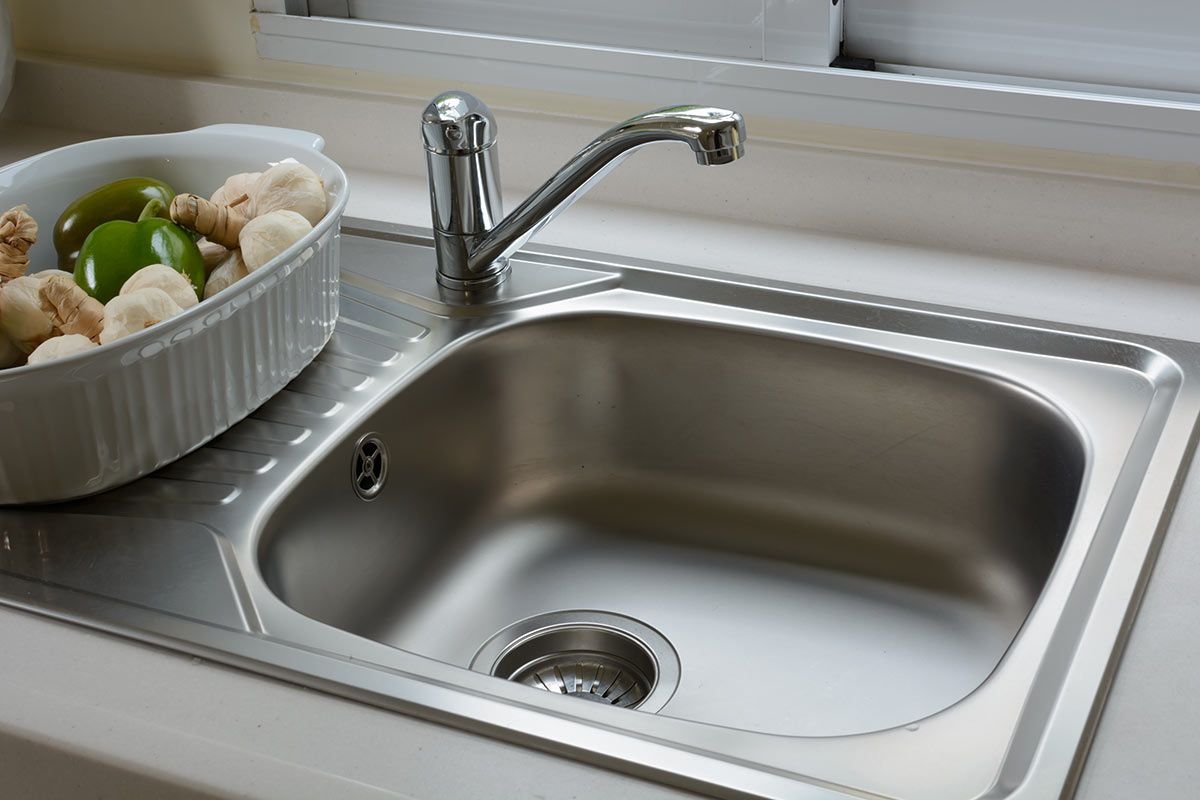
A kitchen sink is made up of several parts that work together for washing, draining, and controlling water. Knowing the kitchen sink parts and names makes it easier to understand how your sink works, identify a problem, and choose the right replacement part.
Kitchen Sink Parts and Names
The main parts of a kitchen sink include:
- Sink basin
- Faucet
- Faucet handles
- Drain opening
- Strainer
- Drain pipe
- P-trap
- Supply lines
- Overflow opening
- Sink clips or mounting brackets
Not every kitchen sink has every part. The exact components depend on the sink style and faucet setup.
1. Sink Basin
The basin is the main part of the sink where you wash dishes, rinse food, and collect water.
Kitchen sinks can have one, two, or sometimes more basins. Single-basin sinks provide one large washing area, while double-basin sinks separate the washing and rinsing areas.
2. Faucet
The faucet supplies water to the sink. It is mounted on the sink deck, countertop, or wall depending on the kitchen design.
Common faucet types include pull-down, pull-out, single-handle, and two-handle faucets.
3. Faucet Handles
Faucet handles control the water flow and temperature.
A single-handle faucet uses one handle to control both hot and cold water. Two-handle faucets have separate controls for hot and cold water.
4. Drain Opening
The drain opening is the hole at the bottom of the sink basin where water leaves the sink.
It connects to the sink strainer and the plumbing underneath the sink.
5. Sink Strainer
The strainer sits inside the drain opening. Its main purpose is to help catch food particles and other debris before they enter the drainpipe.
A removable strainer can also make cleaning the drain area easier.
6. Drain Pipe
The drain pipe carries wastewater away from the sink.
It connects the sink drain to the plumbing system under the countertop. Keeping this area clean can help reduce drainage problems.
7. P-Trap
The P-trap is the curved section of pipe underneath the sink.
It holds a small amount of water that helps prevent sewer gases from coming back through the drain. The curved shape also provides access for clearing certain types of blockages.
8. Supply Lines
Supply lines carry water from the home’s plumbing system to the faucet.
There are normally separate connections for hot and cold water in a standard kitchen faucet setup.
9. Overflow Opening
Some kitchen sinks have an overflow opening, although it is more common on certain bathroom sinks.
When present, it provides an additional path for water to drain if the water level becomes too high.
10. Sink Clips or Mounting Brackets
Mounting clips or brackets help secure certain types of sinks to the countertop.
The mounting method depends on the sink design. For example, undermount sinks and drop-in sinks use different installation methods.
Kitchen Sink Parts Diagram: How They Connect
The basic path of water through a kitchen sink is:
Faucet → Sink Basin → Drain Opening → Strainer → Drain Pipe → P-Trap → Household Drain System
Understanding this basic layout can make it easier to identify where different sink components are located.
Parts of a Double Kitchen Sink
A double kitchen sink has two basins instead of one, but many of the plumbing components are shared.
The visible parts usually include:
- Two sink basins
- Faucet
- Faucet handles
- Two drain openings
- Two strainers
- Connecting drain plumbing
Depending on the plumbing design, the two drains may connect to a shared drain pipe before reaching the P-trap.
Kitchen Sink Parts You Can Easily Replace
Some sink components are commonly replaced when they become worn or damaged.
These can include:
- Sink strainer
- Faucet aerator
- Faucet handle
- Faucet cartridge
- Supply line
- Drain components
- P-trap
Before replacing a part, check its size, connection type, and compatibility with your existing sink or faucet.
Common Kitchen Sink Problems and the Parts Involved
Slow Drain
A slow drain may be related to buildup in the strainer, drainpipe, or P-trap.
Leaking Faucet
A faucet leak may involve the handle, cartridge, connections, or supply lines.
Water Leaking Under the Sink
Water underneath the sink can come from a drain connection, supply line, P-trap, or another plumbing connection.
Bad Drain Smell
A persistent odor can sometimes be associated with the drain or plumbing system. Cleaning the sink and drain area may help, but persistent plumbing problems may require professional inspection.
How to Keep Kitchen Sink Parts in Good Condition
Regular maintenance can help keep your sink working properly.
- Clean the sink basin regularly.
- Remove food debris from the strainer.
- Check visible plumbing connections for leaks.
- Avoid putting unsuitable materials down the drain.
- Clean the faucet when mineral buildup appears.
- Check underneath the sink occasionally for moisture or leaks.
Frequently Asked Questions
What are the main parts of a kitchen sink?
The main parts include the sink basin, faucet, drain opening, strainer, drainpipe, P-trap, supply lines, and mounting hardware.
What is the part under the kitchen sink called?
The plumbing underneath the sink includes several parts. The curved section is commonly called the P-trap, while the connected pipes form part of the sink’s drainage system.
What is the hole at the bottom of a kitchen sink called?
It is the drain opening. A sink strainer is commonly fitted inside this opening.
What is the purpose of a sink strainer?
A sink strainer helps catch food particles and debris before they enter the drainpipe.
What is the curved pipe under a kitchen sink?
The curved pipe is called the P-trap. It holds water and forms part of the sink’s drainage system.
Final Thoughts
Knowing the kitchen sink parts and names makes it easier to understand your sink and identify basic components. From the basin and faucet to the strainer, drainpipe, and P-trap, each part has a specific function in the sink’s water supply or drainage system.
If you understand how these components connect, basic sink maintenance and identifying common problems become much easier.