
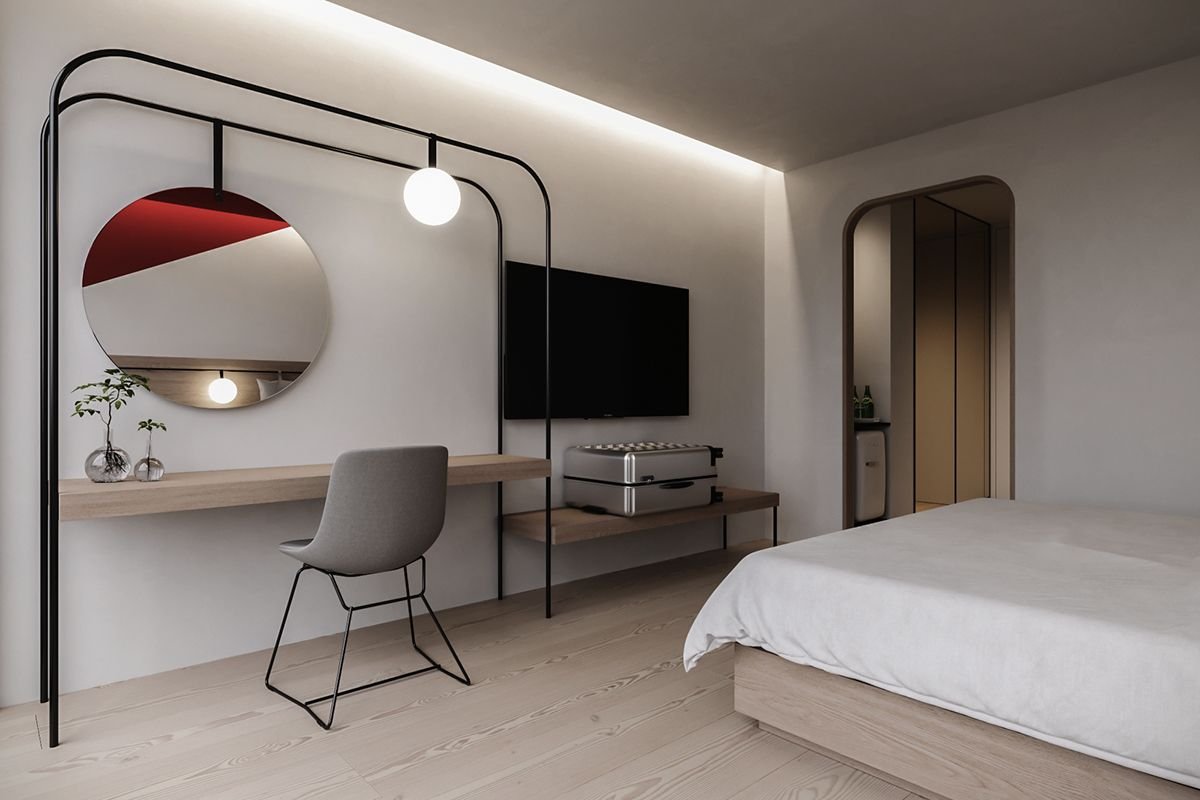
A small hotel room interior design needs to balance comfort, style, storage, and movement without making the room feel crowded. When space is limited, every piece of furniture and every decorative detail needs to have a purpose.
The good news is that a small hotel room can still feel comfortable, modern, and welcoming. Smart furniture placement, multifunctional pieces, layered lighting, mirrors, practical storage, and a carefully chosen color palette can make a compact room feel much more spacious.
Whether you are designing a boutique hotel, guest room, budget hotel, or simply looking for hotel-inspired ideas for a small bedroom, these ideas can help you create a polished interior.
Why Small Hotel Room Interior Design Matters
Guests expect a hotel room to feel comfortable even when the room itself is compact.
A successful small-room design should provide space for the essentials while keeping movement simple. Multifunctional furniture, compact storage, and efficient layouts are commonly used to make smaller hotel rooms feel more functional.
Good design can help:
- Reduce visual clutter
- Improve movement around the room
- Provide useful storage
- Create a comfortable sleeping area
- Make the room appear more spacious
- Improve lighting
- Give the hotel a memorable visual style
17 Small Hotel Room Interior Design Ideas
1. Make the Bed the Main Focal Point
In a compact hotel room, the bed is usually the largest piece of furniture.
Instead of competing with it using too many decorative elements, make the bed wall the main focal point.
A simple upholstered headboard, attractive wall finish, bedside lighting, and coordinated bedding can create a polished appearance without using much additional floor space.
2. Choose Multifunctional Furniture
Furniture that performs more than one function can be extremely useful in a small room.
Consider:
- A desk that doubles as a vanity
- A bench that works as luggage seating
- A bed with storage underneath
- A headboard with integrated shelves
- A compact desk with drawers
- A wall-mounted folding desk
Multifunctional furniture helps reduce the number of separate pieces needed in the room.
3. Use a Built-In Headboard
A built-in headboard can combine style and functionality.
It can incorporate:
- Reading lights
- Small shelves
- Charging points
- Decorative panels
- Bedside surfaces
- Hidden storage
This approach reduces the need for several separate bedside pieces and creates a clean visual wall.
4. Use Floating Nightstands
Traditional bedside tables can take up valuable floor space.
Floating nightstands attached to the wall can provide a similar function while keeping more of the floor visible.
This can also make cleaning easier and give the room a lighter appearance.
5. Add Smart Storage
Storage is one of the biggest challenges in a small hotel room.
Instead of using several large cabinets, consider:
- Slim wardrobes
- Built-in cabinets
- Under-bed storage
- Open shelves
- Headboard storage
- Wall-mounted cabinets
- Recessed shelving
The goal is to provide enough storage without making the room feel boxed in.
6. Choose Light and Warm Colors
A soft, neutral palette can help create a calm and uncluttered atmosphere.
Good options include:
- Warm white
- Cream
- Beige
- Soft gray
- Taupe
- Light wood tones
You can then add personality with artwork, cushions, a chair, or other small accents.
Using too many strong colors can make a compact room feel visually busy.
7. Use Mirrors Strategically
A well-positioned mirror can reflect light and create a greater sense of depth.
A large mirror near the desk, wardrobe, or entry area can also serve a practical purpose.
Consider placing a mirror where it reflects natural light or an attractive part of the room rather than a cluttered area.
Mirrors are commonly recommended as a way to enhance the perceived spaciousness of compact hotel rooms.
8. Use Layered Lighting
Lighting is especially important in a small hotel room.
Instead of relying on one central ceiling fixture, combine different types of lighting:
Ambient lighting:
Provides general illumination.
Task lighting:
Useful for reading, working, or getting ready.
Accent lighting:
Highlights architectural details, artwork, or decorative features.
Bedside reading lights, wall lights, under-cabinet lighting, and soft ceiling illumination can create a more comfortable atmosphere.
9. Create a Compact Work Area
Many hotel guests need a place to work or use a laptop.
A full-size office desk may not be necessary.
A slim wall-mounted desk or narrow console can provide a practical workspace without taking up too much floor area.
Add a comfortable chair and provide convenient access to charging points.
10. Keep the Floor as Open as Possible
An open floor area can make a small room feel easier to move around.
Avoid unnecessary furniture and choose pieces with a compact footprint.
Wall-mounted furniture can be especially useful because it keeps more floor visible.
11. Use Sliding or Space-Saving Doors
Traditional hinged doors require space for their swing.
Where appropriate and permitted by the building design, sliding doors can reduce the amount of floor area required for door movement.
They can be useful for bathrooms, wardrobes, or other areas where space is limited.
The exact door solution should always meet applicable safety, accessibility, privacy, and building requirements.
12. Create a Dedicated Luggage Area
Guests need somewhere to place luggage.
Instead of allowing suitcases to remain on the floor, provide a compact luggage bench or designated luggage area.
A bench with storage underneath can serve two purposes without requiring another large furniture item.
13. Use Slim Furniture
Large, bulky furniture can quickly overwhelm a small hotel room.
Choose furniture with a relatively narrow profile where practical.
For example:
- Slim bedside tables
- Narrow desks
- Compact chairs
- Shallow wardrobes
- Streamlined media units
The objective is to provide the necessary function while preserving circulation space.
14. Add Warm Wood Accents
Wood tones can make a compact hotel room feel warmer and more welcoming.
You can introduce wood through:
- Headboards
- Bedside tables
- Wall panels
- Shelving
- Desks
- Decorative details
Wood can also work well with neutral colors and soft textiles.
15. Keep Decorative Elements Simple
A small hotel room doesn’t need dozens of decorative accessories.
Instead, choose a few strong details such as:
- One large artwork
- A textured headboard
- A decorative mirror
- A small plant
- Coordinated cushions
- A feature wall
A restrained approach can make the room feel intentional rather than crowded.
16. Make the Window Area Work Harder
Natural light can have a major visual effect in a compact room.
Avoid unnecessarily blocking windows with tall furniture.
Use suitable window treatments that provide privacy and light control while maintaining a clean appearance.
If the room has an attractive view, arrange the furniture so guests can enjoy it when practical.
17. Design for Easy Maintenance
Hotel rooms need to be cleaned and maintained regularly, so appearance isn’t the only consideration.
Furniture and finishes should be selected with durability and cleaning in mind.
Keep enough access around furniture for housekeeping and maintenance.
Easy-to-clean surfaces, durable fabrics, and practical layouts can help make the room easier to maintain over time.
Small Hotel Room Layout Ideas
The layout should be based on the actual shape and dimensions of the room rather than simply copying another hotel’s floor plan.
Layout 1: Bed Against the Main Wall
Place the bed against the longest suitable wall, with compact nightstands on either side.
A slim desk can be positioned along another wall.
This is a straightforward arrangement for many rectangular rooms.
Layout 2: Bed + Workstation Wall
Place the bed on one side and a compact desk on another.
This creates two clear functions:
Sleeping zone → Working zone
The two areas can be visually connected through matching finishes.
Layout 3: Built-In Headboard Zone
Use a full-width headboard that incorporates lighting and small storage.
This can reduce the need for multiple separate furniture pieces.
Layout 4: Corner Work Area
If the room has an unused corner, a compact desk can turn it into a useful workspace.
Choose a small chair that can be pushed underneath when the desk isn’t being used.
How to Make a Small Hotel Room Look Bigger
You don’t need to physically increase the room size to make it feel more spacious.
Try these techniques:
Use a Consistent Color Palette
Too many contrasting colors can visually divide the room.
A coordinated palette creates a smoother appearance.
Keep Furniture Proportional
Avoid furniture that is significantly larger than the room requires.
Use Mirrors
Strategically positioned mirrors can reflect light and add visual depth.
Keep Surfaces Clear
Reduce unnecessary objects on desks, nightstands, and shelves.
Use Vertical Space
Tall storage and wall-mounted elements can provide functionality while preserving floor space.
Maximize Lighting
A combination of ambient, task, and accent lighting can make the room feel more layered and comfortable.
Small Hotel Room Interior Design Color Ideas
Warm Neutral
Beige, cream, and warm wood can create a relaxing hotel atmosphere.
Modern Gray
Soft gray combined with white and natural wood can create a contemporary look.
Earthy Green
Muted green accents can bring a subtle connection to nature.
Black and Neutral
Small amounts of black can add contrast to a neutral interior.
Blue and White
Soft blue accents can create a calm and fresh appearance.
Hotel Bedroom Lighting Ideas
Lighting should support different guest activities.
For example, guests may need:
- Soft lighting when relaxing
- Bright lighting when getting ready
- Reading light beside the bed
- Desk lighting when working
- Entry lighting when entering the room
A layered approach allows different areas to function independently.
Small Hotel Room Furniture Checklist
Before choosing furniture, consider:
- Bed size
- Bedside tables
- Headboard
- Desk
- Chair
- Wardrobe
- Luggage area
- Mirror
- Storage
- Lighting
- Media or TV solution
- Charging access
Not every room needs a separate piece for every function. Combining functions can save space.
Common Small Hotel Room Design Mistakes
Using Furniture That Is Too Large
Oversized furniture can make circulation difficult.
Adding Too Much Decor
Too many accessories create visual clutter.
Ignoring Storage
Guests need somewhere to put clothes, luggage, and personal items.
Using Only One Light Source
A single ceiling fixture may not provide the right atmosphere or task lighting.
Blocking Windows
Tall furniture can reduce natural light and make a room feel more enclosed.
Forgetting Maintenance
Furniture that looks attractive but is difficult to clean or repair may create operational problems.
FAQs About Small Hotel Room Interior Design
How do you make a small hotel room look luxurious?
Focus on proportion, lighting, materials, comfortable bedding, coordinated colors, and a small number of attractive decorative details. A clean and uncluttered layout can often look more refined than a room filled with expensive accessories.
What furniture is best for a small hotel room?
Compact and multifunctional furniture is usually useful. Consider storage beds, floating nightstands, slim desks, built-in wardrobes, and luggage benches with storage.
What colors make a small hotel room look bigger?
Light and warm neutral colors such as cream, beige, soft white, and light gray can help create a brighter visual appearance.
How can I add storage to a small hotel room?
Use built-in cabinets, under-bed storage, vertical shelves, headboard storage, and slim wardrobes. The best option depends on the room’s layout.
Are mirrors good for small hotel rooms?
Yes. A strategically placed mirror can reflect light and create visual depth. It should be positioned thoughtfully so that it reflects an attractive or useful part of the room.
What type of lighting is best for a small hotel room?
Layered lighting is useful because it provides general illumination while also supporting activities such as reading, working, and getting ready.
Final Thoughts
Good small hotel room interior design is about making every part of the room work harder without making the space feel crowded.
Start with a practical layout, choose appropriately sized furniture, use multifunctional pieces, build storage into walls or furniture where possible, and keep the color palette coordinated.
Then add mirrors, layered lighting, warm materials, and a few carefully selected decorative details.
The result can be a small hotel room that feels comfortable, modern, functional, and welcoming without relying on excessive furniture or decoration.