
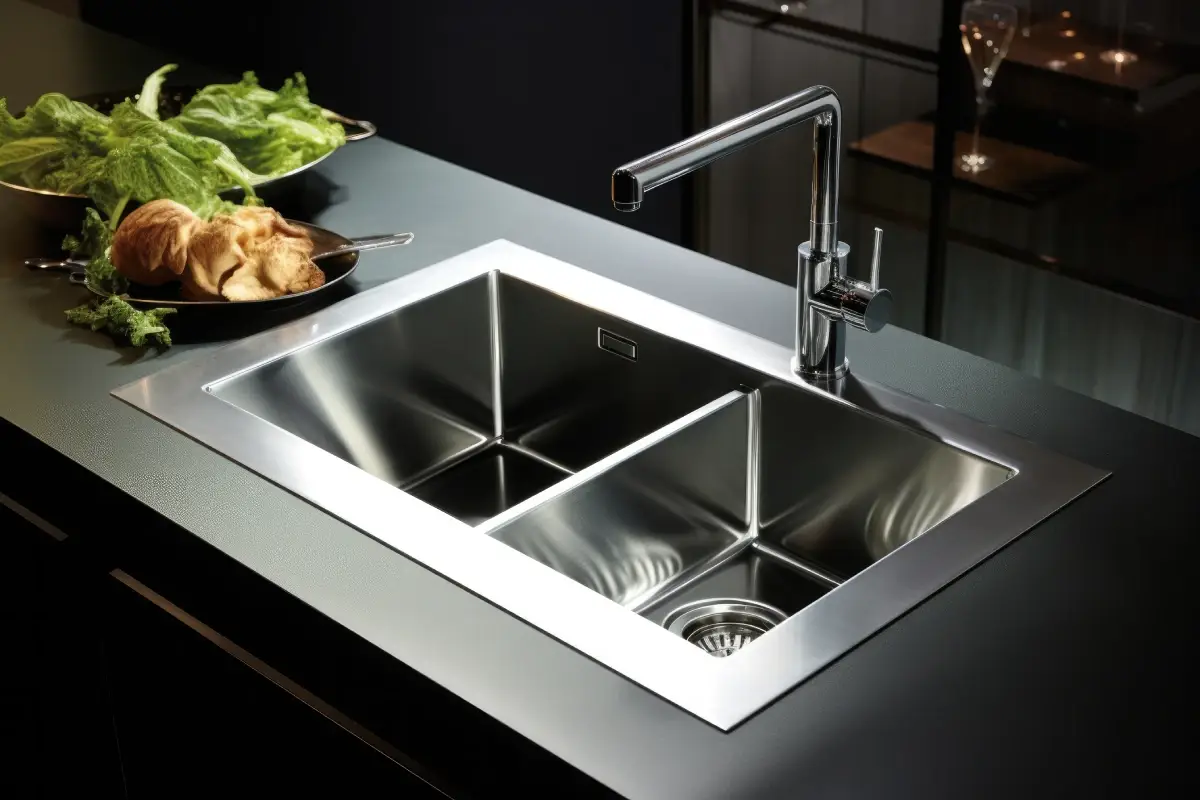
Kitchen Sink Parts and Names
A kitchen sink may look like a simple fixture, but it is made up of several different components that work together to bring water into the sink and carry wastewater away.
Knowing the kitchen sink parts and names can be useful when you’re planning a kitchen remodel, replacing a component, organizing your kitchen plumbing, or simply trying to understand what is underneath your sink.
The exact components vary depending on the sink and faucet design. Some kitchens have a single-bowl sink, while others have double bowls, pull-out sprayers, garbage disposals, or dishwasher connections.
In this guide, we’ll explain the main parts of a kitchen sink, what each part does, and how the different components work together.
Main Kitchen Sink Parts and Names
Here are the most common kitchen sink components:
- Sink basin
- Sink rim
- Drain opening
- Basket strainer
- Strainer flange
- Drain assembly
- Faucet
- Faucet handle or controls
- Faucet spout
- Faucet aerator
- Sprayer or spray head
- Soap dispenser
- Water supply lines
- Shut-off valves
- Tailpiece
- P-trap
- Trap arm
- Garbage disposal
- Dishwasher drain connection
- Mounting hardware
Not every kitchen sink has every component. For example, a garbage disposal or separate spray head is optional, while the basic basin, drain, faucet, and plumbing components are common parts of a kitchen sink system.
1. Sink Basin
The sink basin is the main bowl-shaped part of the sink.
It holds water and provides the area where you wash dishes, rinse food, or clean other kitchen items.
Kitchen sinks can have:
- Single basins
- Double basins
- Triple basins
- Large deep bowls
- Smaller secondary bowls
The basin is also where the drain opening is located.
2. Sink Rim
The sink rim is the edge around the top of the sink.
Its design depends on the type of installation.
Common kitchen sink installation styles include:
- Drop-in sinks
- Undermount sinks
- Farmhouse sinks
- Flush-mount sinks
The rim can also affect the amount of countertop space available around the sink.
3. Drain Opening
The drain opening is located at the bottom of the sink basin.
It provides the pathway for wastewater to leave the basin.
The drain connects to the drain assembly underneath the sink, eventually leading toward the P-trap and household drainage system.
4. Basket Strainer
The basket strainer sits inside the drain opening.
Its main purpose is to allow water to pass through while catching larger food particles and debris.
A typical basket strainer can be removed for cleaning.
Keeping the strainer clean can help prevent food debris from entering the drain.
5. Strainer Flange
The strainer flange is the visible ring around the drain opening.
It forms part of the connection between the sink and the drain assembly.
The flange works together with seals and other hardware to create a secure connection and help prevent water from leaking around the drain.
6. Drain Assembly
The drain assembly includes the components that carry wastewater away from the sink.
Depending on the setup, it can include:
- Basket strainer
- Strainer flange
- Gaskets
- Locknut
- Tailpiece
- P-trap
- Trap arm
- Connecting fittings
The exact arrangement can vary between single-bowl, double-bowl, and garbage-disposal installations.
7. Kitchen Faucet
The faucet is the fixture that supplies water to the sink.
Kitchen faucets come in many designs, including:
- Single-handle faucets
- Two-handle faucets
- Pull-down faucets
- Pull-out faucets
- High-arc faucets
- Bridge-style faucets
The faucet connects to the home’s hot and cold water supply.
8. Faucet Handle or Controls
The faucet handle controls the water flow and, depending on the faucet design, temperature.
A single-handle faucet typically uses one lever to control both flow and temperature.
Two-handle faucets have separate controls for hot and cold water.
9. Faucet Spout
The spout is the part of the faucet through which water exits.
Its shape and height can vary considerably.
A high-arc spout provides more clearance around the sink, while a lower-profile design can create a simpler appearance.
The faucet spout is connected to the faucet body and water supply system.
10. Faucet Aerator
The aerator is located at the end of many faucet spouts.
It helps regulate the water flow as water exits the faucet.
If the water stream becomes uneven, the aerator may need cleaning or replacement depending on the faucet design.
11. Spray Head
A spray head provides another way to direct water around the sink.
Many modern kitchen faucets have a pull-down or pull-out spray head integrated into the faucet.
Other setups may have a separate side sprayer.
A spray head can make it easier to rinse dishes and clean different areas of the sink.
12. Spray Hose
If your kitchen faucet has a pull-out or pull-down spray head, it usually connects through a flexible spray hose.
The hose allows the spray head to move away from its resting position.
The exact hose arrangement depends on the faucet model.
13. Soap Dispenser
A soap dispenser is an optional accessory that can be installed beside the faucet.
It provides a convenient place for dish soap while keeping the countertop less cluttered.
Some kitchen sinks and countertops have extra openings that can accommodate accessories such as soap dispensers or sprayers.
14. Water Supply Lines
The water supply lines bring water from the home’s plumbing system to the faucet.
Most kitchen faucets receive separate hot and cold water supplies.
Flexible supply lines are commonly used to connect the faucet to the shut-off valves underneath the sink.
15. Shut-Off Valves
Shut-off valves control the water supply going to the faucet.
They are usually located underneath the sink.
If the faucet needs to be repaired or replaced, the appropriate shut-off valves can be used to stop water flowing to the faucet without shutting off the entire home’s water supply.
16. Tailpiece
The tailpiece is the section of pipe that connects the sink drain assembly to the P-trap.
Water leaving the sink travels through the drain and then into the tailpiece before reaching the trap.
The tailpiece is an important part of the drainage path underneath the sink.
17. P-Trap
The P-trap is the curved section of plumbing underneath the sink.
It holds a small amount of water, which creates a water seal that helps prevent sewer gases from traveling back through the drain.
The P-trap is one of the most recognizable components underneath a kitchen sink.
18. Trap Arm
The trap arm is the section of drain piping that connects the P-trap toward the wall drain.
It continues the path that wastewater follows after passing through the trap.
The exact plumbing arrangement depends on the home’s drainage system and installation.
19. Garbage Disposal
A garbage disposal is an optional kitchen sink component installed beneath the sink.
It processes food waste before the material moves through the drainage system.
Not every kitchen has a garbage disposal, and the plumbing arrangement changes when one is installed.
20. Dishwasher Drain Connection
If your kitchen has a dishwasher, its drain hose may connect to the kitchen sink drainage system.
Depending on the installation, the dishwasher drain can connect to a garbage disposal or another suitable drain connection.
The exact setup varies by plumbing configuration and local requirements.
21. Sink Mounting Hardware
Mounting hardware helps secure the sink in its countertop or cabinet installation.
The exact hardware depends on whether the sink is:
- Drop-in
- Undermount
- Farmhouse
- Flush-mount
Different sink manufacturers use different mounting systems.
Kitchen Sink Parts Diagram: How Everything Connects
The easiest way to understand the system is to divide it into two sections.
Water Supply Side
The water supply generally follows this path:
Water supply → shut-off valves → supply lines → faucet → spout
If the faucet has a spray function, water can also flow through the spray hose to the spray head.
Drainage Side
Wastewater generally follows this path:
Sink basin → drain/strainer → tailpiece → P-trap → trap arm → household drain
A garbage disposal or dishwasher connection may be added to the drainage system depending on the kitchen setup.
Single-Bowl Kitchen Sink Parts
A single-bowl sink usually has one main basin and one drain.
Common components include:
- Basin
- Faucet
- Faucet controls
- Drain opening
- Basket strainer
- Tailpiece
- P-trap
- Trap arm
- Supply lines
- Shut-off valves
The exact setup depends on the faucet and plumbing configuration.
Double-Bowl Kitchen Sink Parts
A double-bowl sink has two connected basins.
Each bowl may have its own drain opening and strainer.
The drainage pipes underneath can connect the two bowls before wastewater reaches the P-trap and main drain.
Double-bowl configurations can therefore have additional connecting fittings compared with a simple single-bowl setup.
Kitchen Faucet Parts and Names
If you’re specifically trying to identify faucet components, these are the most common names:
| Part | Function |
|---|---|
| Handle | Controls water flow and temperature |
| Faucet body | Main faucet structure |
| Spout | Directs water into the sink |
| Aerator | Helps regulate the water stream |
| Spray head | Provides a directed spray |
| Spray hose | Connects a movable spray head |
| Escutcheon | Covers the mounting area around certain faucet installations |
| Supply lines | Carry hot and cold water to the faucet |
The exact components vary depending on the faucet design.
Kitchen Sink Drain Parts and Names
The most important drain components include:
Basket Strainer
Catches larger debris while allowing water to drain.
Strainer Flange
Forms part of the connection around the sink drain opening.
Tailpiece
Carries wastewater downward from the drain assembly.
P-Trap
Creates a water seal in the curved section of the drain.
Trap Arm
Carries wastewater from the trap toward the wall drain.
Slip-Joint Connections
Removable connections can join sections of tubular drain piping and allow components to be serviced.
Kitchen Sink Parts and Their Functions
Here is a quick reference:
| Kitchen Sink Part | Main Function |
|---|---|
| Basin | Holds water and provides the washing area |
| Rim | Forms the upper edge of the sink |
| Drain opening | Allows wastewater to leave the basin |
| Basket strainer | Catches larger debris |
| Strainer flange | Connects and seals around the drain |
| Faucet | Supplies water |
| Handle | Controls water |
| Spout | Directs water |
| Aerator | Regulates the water stream |
| Spray head | Provides directed water spray |
| Supply lines | Bring water to faucet |
| Shut-off valves | Control faucet water supply |
| Tailpiece | Connects drain to P-trap |
| P-trap | Holds a water seal |
| Trap arm | Connects trap toward wall drain |
| Garbage disposal | Processes food waste |
| Dishwasher connection | Connects dishwasher drainage |
How to Identify the Parts Under Your Kitchen Sink
If you’re looking underneath your sink and don’t know what you’re looking at, start at the top and follow the pipes downward.
Step 1: Find the Drain
Look directly underneath the sink basin.
The drain opening connects to the drain assembly.
Step 2: Find the Tailpiece
Look for the mostly vertical pipe immediately below the drain.
This is generally the tailpiece.
Step 3: Find the P-Trap
Look for the curved pipe farther down.
That curved section is the P-trap.
Step 4: Find the Trap Arm
Follow the pipe from the P-trap toward the wall.
That section is the trap arm.
Step 5: Find the Supply Lines
Look for the smaller flexible lines connecting the faucet to the shut-off valves.
These are the water supply lines.
Common Kitchen Sink Problems and the Parts Involved
Understanding the names of sink parts can make it easier to describe a problem to a professional.
Water Around the Drain
The drain connection, flange, gasket, or related fittings may need inspection.
Slow Drainage
Food debris or buildup can restrict drainage. The strainer and drain path should be checked.
Water Under the Sink
Possible areas to inspect include supply connections, drain connections, the tailpiece, P-trap, or other joints.
Weak Faucet Flow
The faucet aerator or other faucet components may need inspection.
Faucet Dripping
The faucet’s internal components may need servicing depending on its design.
For complicated plumbing issues, use the manufacturer’s instructions or consult a qualified plumbing professional rather than replacing parts based only on appearance.
Kitchen Sink Parts: Maintenance Tips
A few simple habits can help keep your sink system working properly.
Clean the Strainer Regularly
Remove food particles and rinse the basket strainer.
Keep the Sink Drain Clear
Avoid allowing large amounts of food debris to enter the drain.
Check Under the Sink
Occasionally look for visible leaks around plumbing connections.
Keep the Cabinet Dry
If you notice water under the sink, identify the source instead of simply drying the cabinet.
Clean the Faucet Aerator
If your faucet stream becomes uneven, inspect the aerator according to the faucet manufacturer’s instructions.
Frequently Asked Questions
What are the main parts of a kitchen sink?
The main parts include the basin, drain opening, basket strainer, faucet, faucet controls, supply lines, tailpiece, P-trap, and related plumbing connections. Some kitchens also have spray heads, garbage disposals, or dishwasher connections.
What is the curved pipe under a kitchen sink called?
The curved pipe is commonly called the P-trap. It holds water in the bend, creating a water seal that helps prevent sewer gases from coming back through the drain.
What is the basket in a kitchen sink drain called?
It is commonly called a basket strainer or sink strainer. It fits into the drain opening and helps catch larger debris while allowing water to pass through.
What is the pipe between the sink drain and P-trap called?
The vertical section connecting the drain assembly to the P-trap is commonly called the tailpiece.
What are the pipes that supply water to the kitchen faucet called?
They are generally called water supply lines. They connect the faucet to the home’s hot and cold water supply.
What is the part at the end of a kitchen faucet called?
The end of the faucet spout commonly contains an aerator, which helps regulate the water stream.
Does every kitchen sink have a garbage disposal?
No. A garbage disposal is an optional component and is not included in every kitchen sink installation.
Final Thoughts
Learning the kitchen sink parts and names makes it much easier to understand how your sink works.
The visible components include the basin, rim, drain, faucet, handles, spout, and spray head. Underneath the sink, the important plumbing components include the strainer, tailpiece, P-trap, trap arm, supply lines, and shut-off valves.
Some kitchens also include a garbage disposal or dishwasher connection.
Once you know what each part is called and what it does, it becomes easier to organize your kitchen design, understand basic maintenance, and communicate clearly when a component needs inspection or replacement.
For more kitchen planning and organization ideas, explore our Parts of the Kitchen guide and Parts of Kitchen Cabinets guide.