
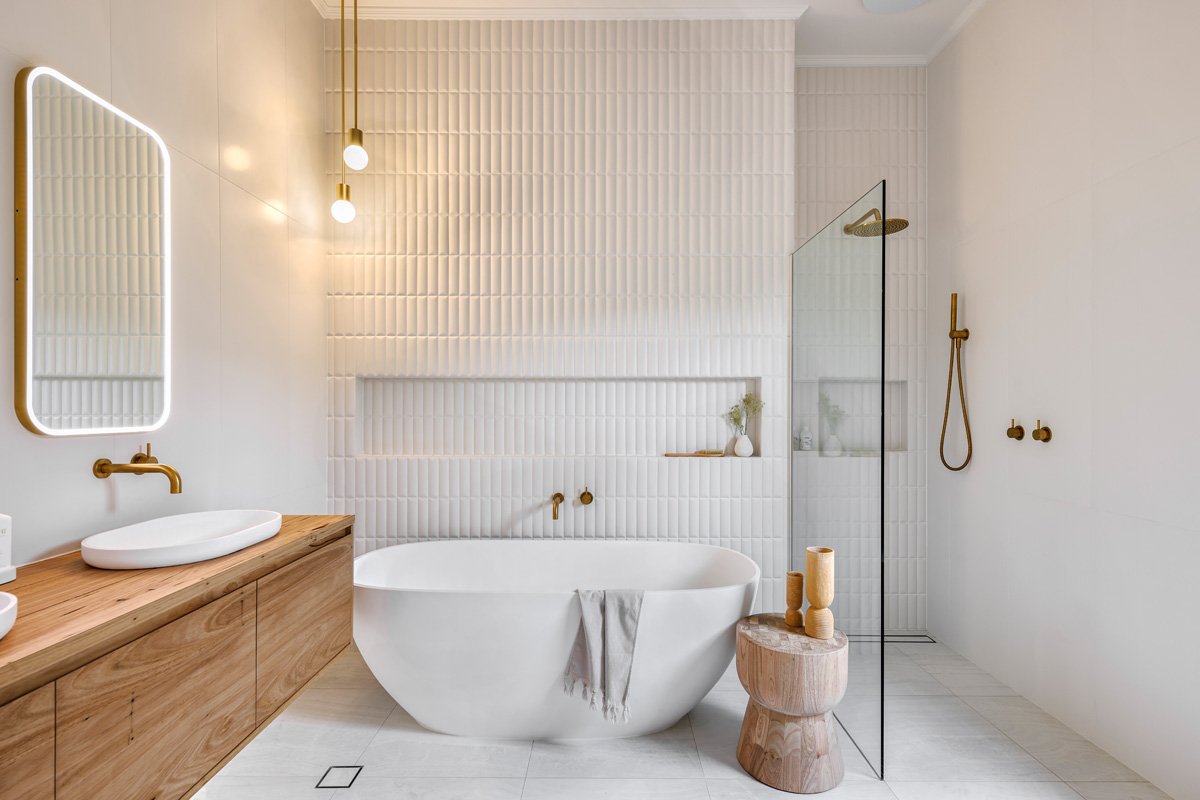
A small bathroom does not have to look plain just because there is less space to work with. Color can change how the room feels, how much light it seems to have, and how well the different pieces of the design work together.
The easiest mistake is assuming that a small bathroom has to be completely white. White is certainly useful, especially when a room has good natural light, but it is not the only option. Soft blue, muted green, warm beige, pale pink, earthy tones, and even deeper colors can work beautifully in a compact bathroom when they are balanced with the right finishes.
If you’re choosing bathroom color schemes for small bathrooms, start by looking at the room’s natural light, flooring, vanity, tile, and fixtures. Then choose a palette that connects those elements instead of treating the wall color as a separate decision.
Here are 11 ideas to consider.
1. Warm White and Light Wood
Warm white is one of the easiest choices for a small bathroom. Unlike an extremely stark white, a warmer shade can make the room feel softer and more welcoming.
Pair warm white walls with a light wood vanity, pale flooring, and simple white fixtures. A large mirror can help bounce light around the room and make the space feel more open.
This combination works particularly well if you want a bathroom that feels clean without looking cold.
Why it works
The limited color palette keeps the room visually simple. The wood adds warmth while the light walls help maintain a bright appearance.
Try this combination:
- Warm white walls
- Light oak vanity
- White sink
- Brushed nickel hardware
- Cream or pale beige flooring
- Large frameless mirror
2. Soft Blue and White
Soft blue is a natural choice for bathrooms because it brings a calm, fresh feeling without making the room visually heavy.
For a small bathroom, choose a muted or pale blue rather than an extremely saturated shade. Combine it with white trim, a white vanity, and light flooring.
If the bathroom has a window, natural daylight can make the blue feel even fresher.
Styling tip
Use blue on the walls while keeping the larger fixtures white. Then bring the blue back through towels, artwork, or a small bath mat.
This gives you color without making every surface compete for attention.
3. Pale Green and Warm White
Soft green is another excellent choice when you want something more interesting than white.
A muted sage or soft green can work especially well with natural wood, cream, brass, and woven accessories. Current small-bathroom design advice also includes soft greens among colors that can work well in compact spaces.
A simple palette
Walls: soft sage
Vanity: natural wood
Fixtures: brushed brass
Floor: warm white or light stone
Accessories: cream and muted green
The result feels relaxed without requiring a complicated design.
4. Light Gray and White
If you prefer a more modern look, try a soft gray and white combination.
The key is choosing a gray that works with your bathroom’s lighting. Gray can look different depending on the amount and type of light in the room, so test a sample before painting the entire bathroom.
Use white for the ceiling, trim, vanity, and larger fixtures.
Keep it from looking flat
Add texture rather than adding several more colors.
For example:
- Textured towels
- Stone-look flooring
- Wood accessories
- Ribbed glass
- A framed mirror
These small details give a gray-and-white bathroom more visual interest.
5. Beige, Cream, and Natural Wood
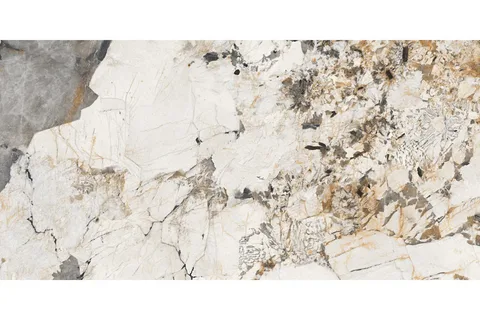
Warm neutrals are a great option if you want your bathroom to feel comfortable rather than clinical.
Combine creamy walls with beige tile and a natural wood vanity. This palette works particularly well with warm lighting.
You can also add small amounts of black through cabinet hardware or a mirror frame.
Best for
This scheme is especially useful if the rest of your home already has warm neutral colors. The bathroom will feel connected to the surrounding rooms instead of looking like a completely separate space.
6. Navy Blue and Soft White
You do not have to avoid dark colors just because your bathroom is small.
A deeper blue can create a dramatic look, particularly in a powder room or bathroom with limited natural light. Designers increasingly use richer colors in compact bathrooms rather than automatically keeping everything pale.
The trick is balance.
Instead of using navy on every surface, combine it with:
- White fixtures
- A large mirror
- Light flooring
- Bright lighting
- Simple hardware
One easy approach
Paint the vanity navy while keeping the walls warm white.
This gives you the personality of a darker color without allowing it to dominate the entire room.
7. Soft Pink and Cream
Pale pink can give a small bathroom a warm and slightly playful appearance.
Choose a dusty or muted pink rather than an intense bubblegum shade. Pair it with cream, white, light wood, or brushed brass.
This combination works especially well in guest bathrooms and powder rooms.
Don’t overdo it
You do not need pink everywhere.
A soft pink wall with cream fixtures and a natural wood vanity can be enough to create the look.
8. Charcoal, White, and Wood

For a modern bathroom, charcoal can be used as an accent color.
Instead of painting every wall dark, consider using charcoal on the vanity, a single feature wall, or selected tiles.
Then balance it with white and natural wood.
The contrast creates a crisp, modern appearance without requiring a large room.
Good combination
Charcoal vanity + white walls + oak accents + black mirror frame
This is simple enough for a small bathroom but still has plenty of character.
9. Light Blue, Beige, and Brass
If you want a soft spa-like feeling, combine pale blue with warm beige.
Then add brass hardware for a little contrast.
The blue keeps the room feeling fresh, beige prevents it from becoming too cool, and brass adds warmth.
Use the colors in this ratio
Think of the palette as:
- 60%: light neutral
- 30%: soft blue
- 10%: brass or another accent
You do not need to follow an exact percentage. The idea is simply to let one color dominate while the other two support it.
10. Olive Green and Cream
Olive green can work surprisingly well in a compact bathroom.
Because it is earthy rather than extremely bright, it pairs naturally with wood, cream, stone, and brass.
For a small bathroom, consider using olive on the vanity or lower half of the walls instead of covering every surface.
This gives the room a richer appearance while keeping enough light surfaces around it.
11. White With One Bold Accent
If you are nervous about committing to color, start with a mostly white bathroom and add one stronger shade.
For example:
White + deep blue
or
White + forest green
or
White + terracotta
The accent can appear on a vanity, shower tile, mirror frame, towels, or artwork.
This is also an easy approach if you are renting and cannot repaint the entire bathroom.
How to Choose the Right Color for Your Small Bathroom
The best color is not necessarily the one that looks best in a paint store. Your bathroom’s lighting and existing finishes matter just as much.
Look at Natural Light
A bathroom with a large window can handle a wider range of colors than a completely windowless room.
If there is little natural light, test your paint under the actual bathroom lighting before making a final choice.
A shade that looks soft and neutral during the day may look completely different under artificial lighting.
Consider Your Flooring
Your wall color should work with the floor.
If the floor is warm beige, a very cool blue-gray wall may create an awkward contrast. If your floor has gray undertones, a cooler wall color may fit better.
Look at the two samples together before deciding.
Think About Your Vanity
The vanity often occupies a significant visual area in a small bathroom.
If you have a dark vanity, lighter walls can provide balance.
If you have a white vanity, you have more freedom to introduce color on the walls or tiles.
Use Mirrors to Support the Color
A large mirror can reflect light and visually open up a compact bathroom. Designers commonly recommend mirrors as one way to make smaller bathrooms feel brighter.
A mirror also reflects your chosen wall color, so placement matters.
Should a Small Bathroom Always Be White?
No.
White can help a small bathroom feel bright, but it is not a requirement. Current design guidance shows a much wider range of successful colors, including blue, green, warm neutrals, yellow, terracotta, and deeper tones.
The important part is how the color is used.
A dark color covering a small room with poor lighting may feel heavy. The same color used on a vanity or feature wall can look excellent.
Likewise, an all-white bathroom can sometimes feel flat if there is no texture or warmth.
Colors That Can Be Tricky in Small Bathrooms
There is no universal list of colors that must never be used. However, some combinations can make a small bathroom feel visually busy.
Be careful with:
- Too many competing colors
- Extremely bright saturated shades on every wall
- Strong contrast between walls and ceiling
- Several different tile colors
- Dark walls combined with very dark flooring and poor lighting
The goal is not necessarily to make everything pale. The goal is to create a palette that feels connected.
How Many Colors Should a Small Bathroom Have?
For most small bathrooms, two or three main colors are enough.
For example:
Warm white + sage green + natural wood
or
Cream + navy + brass
or
White + soft blue + beige
You can add small accents, but keeping the main palette controlled prevents the room from feeling cluttered.
Small Bathroom Color Mistakes to Avoid
1. Choosing paint without testing it
Always test a small area or sample first.
2. Ignoring the lighting
A color can change dramatically between natural and artificial light.
3. Matching everything too closely
A completely identical palette can look flat. Add texture or a small contrasting accent.
4. Using too many strong colors
One statement color is often enough.
5. Forgetting the ceiling
A ceiling that strongly contrasts with the walls can visually divide the room. A cohesive palette can make the space feel more continuous.
Final Thoughts
The best bathroom color schemes for small bathrooms are not limited to plain white. Soft blue, sage green, warm beige, cream, muted pink, navy, and earthy colors can all work when they are paired thoughtfully.
Start with the things you cannot easily change, such as the flooring and fixtures. Then choose your wall color around them. Keep the main palette simple, use mirrors and good lighting, and bring in stronger colors through a vanity, accent wall, tile, or accessories.
A small bathroom gives you less physical space, but that does not mean you have to limit your design choices.
FAQ
What is the best color for a very small bathroom?
Soft white, warm white, pale blue, light green, and gentle neutral shades are good starting points. The best choice depends on the bathroom’s natural and artificial lighting.
What colors make a small bathroom look bigger?
Light and cohesive colors can help a compact bathroom feel brighter and more open. White, cream, pale blue, soft green, and light gray are common choices.
Can you use dark colors in a small bathroom?
Yes. Navy, charcoal, olive, and other deeper shades can work as accent colors or even across a small bathroom when balanced with lighting, mirrors, and lighter finishes.
Should a small bathroom have an accent wall?
An accent wall can work well if you want to introduce stronger color without making every wall visually heavy. A colored vanity is another good alternative.
How many colors should I use in a small bathroom?
Two or three main colors are usually enough. This keeps the room visually organized while still allowing some personality.