
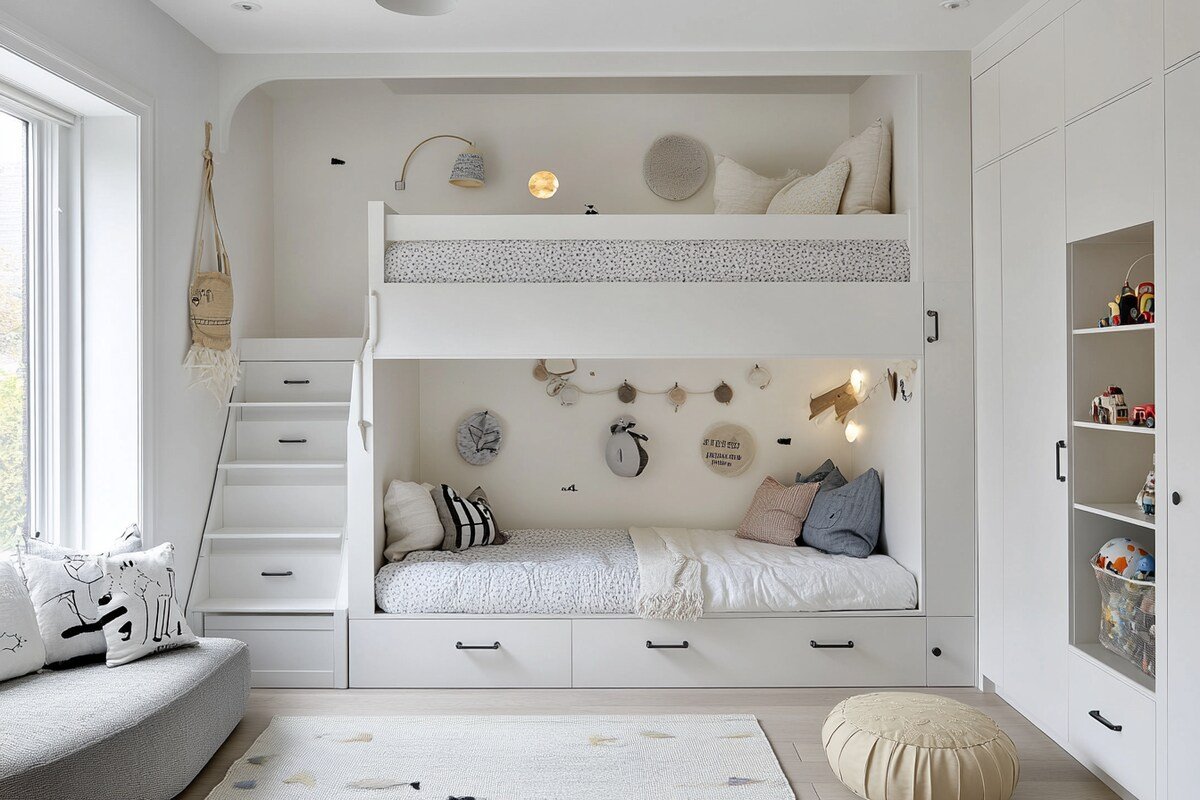
Kids’ bedrooms can get messy quickly. Toys end up on the floor, clothes pile up on chairs, and books seem to find their way into every corner. When the room is small, finding enough storage can feel even harder.
The good news is that you don’t always need a bigger bedroom. You can often create much more storage by making better use of the space you already have.
From the area underneath the bed to empty walls, closet doors, corners, and even furniture, there are plenty of places to store everyday items.
Here are 11 practical ways to maximize storage in a kids bedroom while keeping the room comfortable and easy to use.
1. Use the Space Under the Bed
The space underneath a bed is one of the easiest places to add storage without taking up additional floor space.
Instead of leaving this area empty, use low storage bins, rolling drawers, or boxes to keep items organized. This is especially useful for things that aren’t needed every day.
You can store:
- Extra bedding
- Seasonal clothes
- Shoes
- Toys
- School supplies
- Books
- Stuffed animals
Choose containers that are easy for your child to pull out. Clear bins can also make it easier to see what’s inside.
For a cleaner look, matching fabric or plastic storage boxes can keep everything looking neat.
Image placement: Add an image showing a kids bed with organized drawers underneath.
2. Add Shelves to Empty Wall Space
Walls are often overlooked when you’re trying to maximize storage in a kids bedroom.
Floating shelves can turn an empty wall into useful storage without taking up valuable floor space. They’re great for books, small toys, framed artwork, and decorative items.
Place frequently used items at a height your child can comfortably reach.
For younger children, avoid putting heavy objects on easily accessible shelves. Secure shelves properly to the wall and keep heavier items lower.
A few simple shelves can make a small bedroom feel much more organized without making it feel crowded.
Image placement: Add a photo of floating shelves filled with children’s books and small toys.
3. Choose a Bed With Built-In Storage
If you’re buying a new bed, consider choosing one that includes built-in drawers or compartments.
A storage bed can give you a large amount of hidden storage while serving its main purpose as a bed.
This can be particularly helpful in a small bedroom where there isn’t enough room for a large dresser or extra cabinets.
Use the drawers for items such as clothes, toys, bedding, or shoes.
The biggest advantage is that the storage stays hidden when the drawers are closed, helping the bedroom look tidy even when the room has lots of belongings.
4. Make the Most of the Closet
A closet doesn’t have to be limited to one hanging rod.
Look for unused vertical space and consider adding another hanging rod, shelf organizer, baskets, or small storage boxes.
You can organize the closet into sections:
Everyday clothes:
Keep these at an easy-to-reach height.
Seasonal clothes:
Place coats, sweaters, and seasonal items higher up.
Shoes:
Use a low shelf or shoe organizer.
Accessories:
Small baskets can hold hats, belts, hair accessories, and other small items.
Keeping similar items together makes it much easier for children to put things away.
Image placement: Add a realistic image of an organized kids’ closet.
5. Use Baskets for Toys
Toy storage doesn’t need to be complicated.
Large baskets are one of the easiest ways to keep toys under control. Instead of having dozens of small toys scattered around the room, children can place them into a few clearly defined baskets.
You could have separate baskets for:
- Stuffed animals
- Building blocks
- Dolls
- Cars
- Puzzles
- Craft supplies
If your child is young, use simple picture labels instead of relying only on written labels.
Place the baskets on low shelves so children can access them without needing help.
The goal isn’t just to hide the toys. It’s to make putting them away simple enough that your child can do it independently.
Image placement: Add a photo of organized toy baskets in a kids bedroom.
6. Turn the Back of the Door Into Storage
The back of a bedroom door is another area that can provide useful storage.
An over-the-door organizer can hold smaller items without taking up floor space.
Depending on the child’s age, it can be used for:
- Shoes
- Small toys
- Art supplies
- Hair accessories
- Books
- School supplies
This solution works particularly well in smaller rooms because the storage uses space that would otherwise remain empty.
Just make sure the organizer doesn’t interfere with the door closing properly.
Image placement: Add an image showing an over-the-door organizer in a kids room.
7. Use Cube Storage for Flexible Organization
Cube storage units are useful because you can change how they’re used as your child grows.
Open cubes can hold books and toys, while fabric or plastic bins can hide smaller items.
For example, one section could hold books while another contains toys. A third section could be used for school supplies.
You can also change the contents over time.
A storage cube that holds toys today might hold books, sports equipment, or craft supplies a few years later.
Choose a sturdy unit and anchor it properly when needed, especially in a child’s bedroom.
8. Create Storage Around the Desk
If your child has a desk in the bedroom, don’t let the surrounding wall space go unused.
Install small shelves, pegboards, wall organizers, or narrow cabinets around the desk.
This creates a dedicated place for:
- Notebooks
- Pencils
- Art supplies
- Books
- Homework materials
- Small electronics
Keeping school supplies close to the desk also makes the workspace easier to maintain.
Try to keep the desk surface mostly clear. Store less frequently used supplies in drawers or containers and keep everyday items within easy reach.
Image placement: Add a photo of a neat kids’ study desk with shelves and organizers.
9. Use the Corners of the Room
Corners can become valuable storage areas when they’re used properly.
A narrow corner bookshelf can provide room for books without taking up much floor space. Corner shelves can also hold toys, decorations, or small baskets.
For very small bedrooms, look for furniture designed specifically for tight spaces.
A tall, narrow storage unit may provide more useful storage than a wide cabinet because it makes better use of vertical space.
Before buying anything, measure the corner carefully so the furniture doesn’t make the room difficult to move around in.
10. Choose Multi-Functional Furniture
One of the smartest ways to maximize storage is to choose furniture that serves more than one purpose.
For example, a storage bench can provide seating while also holding toys or blankets underneath.
Other useful options include:
- Storage ottomans
- Beds with drawers
- Benches with compartments
- Desks with built-in shelves
- Bookcases with cabinets
- Window seats with storage
This approach helps you add storage without filling the room with extra furniture.
When choosing multifunctional furniture, think about how your child will actually use it every day. The best storage solution is one that’s easy to access and simple to put away.
Image placement: Add a photo of a multifunctional storage bench or furniture piece in a kids bedroom.
11. Rotate Toys Instead of Storing Everything at Once
Sometimes the problem isn’t a lack of storage. There may simply be too many things in the room at the same time.
Instead of keeping every toy available, try rotating them.
Keep a selection of favorite toys accessible and store some others in a closet, storage box, or another appropriate location.
After a few weeks, swap some of the toys.
This can make the bedroom easier to organize and can also give older toys a fresh feel when they come back into the room.
You don’t need dozens of storage containers if you reduce the amount of stuff that needs to be stored every day.
How Can I Make a Small Kids Bedroom Feel More Organized?
Storage isn’t only about adding cabinets and baskets. The way you arrange everything matters too.
Start by keeping everyday items within easy reach. Things your child uses regularly should be stored at a comfortable height.
Items that are rarely used can go into higher shelves, under-bed containers, or the back of the closet.
Try to give every major category its own place. For example, books can have one area, toys another, and clothing its own storage space.
When everything has a designated home, cleaning up becomes much easier.
What Should I Store in a Kids Bedroom?
The best storage setup depends on the child’s age and the size of the room.
Common items include:
- Clothes
- Shoes
- Toys
- Books
- Bedding
- School supplies
- Art materials
- Sports equipment
- Accessories
- Seasonal items
You don’t necessarily need a separate storage solution for every item.
A few well-organized systems can handle multiple categories. For example, a large storage bench could hold blankets and stuffed animals, while cube storage could handle toys and books.
How Do I Keep Kids’ Bedroom Storage Organized?
The simplest storage system is usually the one that a child can actually maintain.
Avoid making the organization too complicated.
Use large, easy-to-identify containers and keep frequently used items where your child can reach them.
You can also do a quick five-minute cleanup at the end of the day.
Every few months, go through clothes and toys to see what your child has outgrown or no longer uses.
Donate usable items and remove broken or unwanted things. This prevents storage areas from becoming overloaded.
Common Storage Mistakes to Avoid
Adding more storage isn’t always the answer. A few common mistakes can actually make a kids bedroom feel more crowded.
Using Too Many Small Containers
Small containers can create extra work. If you have to sort every tiny item into a different box, cleaning up can become frustrating.
Ignoring Vertical Space
Don’t focus only on floor storage. Shelves and tall furniture can provide valuable storage without using much floor area.
Keeping Everything Accessible
Not every item needs to be within your child’s reach. Seasonal clothes and rarely used belongings can be stored higher up or in less accessible areas.
Buying Furniture Before Measuring
Always measure the available space before buying storage furniture. A large cabinet might provide storage but make the room difficult to walk through.
Forgetting to Declutter
Even the best organization system won’t work if there are simply too many belongings.
Quick Kids Bedroom Storage Checklist
Before you finish organizing the room, check these areas:
- ☐ Under the bed
- ☐ Empty wall space
- ☐ Closet shelves
- ☐ Closet doors
- ☐ Behind the bedroom door
- ☐ Desk area
- ☐ Room corners
- ☐ Storage furniture
- ☐ Toy baskets
- ☐ Unused or outgrown items
Final Thoughts
Learning how to maximize storage in a kids bedroom doesn’t require a major renovation.
Start with the space you already have. Use the area under the bed, add shelves to empty walls, improve the closet, organize toys into baskets, and choose furniture that provides more than one function.
Most importantly, make the system simple enough for your child to use.
A bedroom with fewer items on the floor and a clear place for everyday belongings will be easier to clean and much more comfortable to use.
The best storage setup is not necessarily the one with the most containers. It’s the one that makes it easy to find things, put them away, and keep the room organized.