
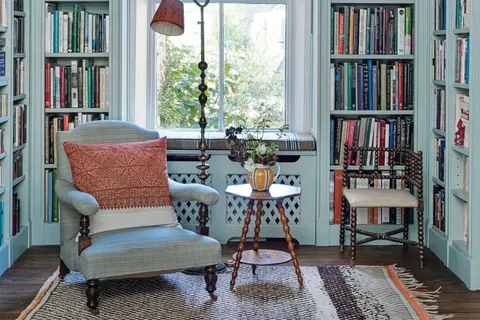
You don’t need an entire room to create a comfortable place to read. An empty corner beside a window, a narrow spot in the bedroom, or even an unused closet can become a cozy reading retreat with the right pieces.
The key is to work with the space you already have. Instead of trying to squeeze a large chair, bookshelf, table, and floor lamp into one tiny area, choose a few pieces that serve a purpose and make the corner feel comfortable.
A good reading nook should give you somewhere to sit, enough light to read comfortably, and a place to keep a book or two within reach. From simple bedroom corners to clever under-stair spaces, these reading nook ideas for small spaces can work in apartments, small bedrooms, and compact homes.
1. Turn an Empty Window Corner Into a Reading Nook
A window can be one of the best places for a reading nook because it gives you natural light during the day.
Place a compact armchair near the window and add a small side table for books, a drink, or a reading lamp. You don’t need much more.
If the window gets strong afternoon sunlight, use lightweight curtains or shades that let some natural light through without making the area too bright.
For a softer look, add a small cushion and a washable throw blanket. A neutral chair paired with warm wood furniture can make the corner feel relaxed without making the room look crowded.
This is especially useful in apartments where you may not have enough floor space for a dedicated reading room.
2. Add a Comfy Reading Chair to a Bedroom Corner
A bedroom corner that isn’t being used can easily become a bedroom reading nook.
Choose a chair that fits the available width rather than buying the largest chair you can find. A compact upholstered chair can be just as comfortable as an oversized recliner when paired with the right cushion and footrest.
Add a narrow floor lamp beside it so you can read at night without turning on the main bedroom light.
Keep the decor simple. One small table, a soft throw, and a basket for books may be all you need.
The goal isn’t to fill the corner. It’s to make it useful.
3. Create a Small Reading Corner Beside the Bed
If your bedroom is too small for a traditional chair, look for the narrowest unused section beside the bed.
A slim chair or small cushioned bench can fit where a larger reading chair wouldn’t.
You can also use a wall-mounted reading light instead of a floor lamp. This keeps the floor clear and gives you more room to move around.
For very small bedrooms, this type of small reading corner works particularly well because the same wall can provide both lighting and storage.
Add one floating shelf above the seating area for a few favorite books.
4. Use a Floating Shelf Instead of a Bookshelf
A full bookshelf can take up valuable floor space in a small room.
Instead, install one or two floating shelves near your reading chair. They provide enough space for your current books without making the area feel heavy.
You can style the shelf with books, a small plant, and one decorative object.
Avoid filling every inch of the shelf. Leaving some open space helps a small reading nook feel cleaner and less crowded.
This is also a good solution for renters if you can use appropriate removable storage products or have permission to install shelves.
5. Turn an Unused Closet Into a Reading Nook
An unused closet can become a surprisingly cozy reading space.
Remove unnecessary items and measure the opening carefully. Depending on the closet’s size, you might fit a small bench, floor cushion, or compact chair.
Add a small wall light or battery-powered lamp if electrical wiring isn’t practical.
A few shelves can hold books, while cushions and a soft blanket make the space more inviting.
A closet reading nook is particularly useful in children’s rooms because it can become a quiet little retreat without taking up additional floor space.
Make sure the space has proper ventilation and that doors don’t create a safety problem before using a closet this way.
6. Create a Cozy Living Room Reading Nook
You don’t need to separate your reading area from the rest of the living room.
Choose an unused corner and give it a slightly different purpose with a chair, small table, and lamp.
A compact chair placed beside a window or next to a bookshelf can naturally create a living room reading nook.
Keep the colors connected to the rest of the room. If your living room has warm wood and cream upholstery, repeat those tones in the reading corner.
This makes the nook feel like part of the room instead of a random collection of furniture.
7. Try a Built-In Bench Reading Nook
If you have a deep window ledge or an awkward architectural space, a built-in bench can make excellent use of it.
Add a properly fitted cushion, two or three pillows, and a small reading light.
The advantage of a bench is that it can provide seating without requiring a large chair.
If you have storage space underneath, use drawers or baskets for books, blankets, and other small items.
This approach works particularly well in homes where every square foot needs to perform more than one job.
8. Use a Narrow Chair in a Tiny Apartment
One of the easiest ways to create a small space reading nook is to choose furniture based on measurements rather than appearance alone.
Before shopping, measure the available width and depth. Remember to leave enough room to walk around the chair.
Look for compact accent chairs, slipper chairs, or other seating with a smaller footprint.
A narrow chair doesn’t have to look uncomfortable. Add a supportive cushion and a soft throw to make it feel more inviting.
For renters and apartment dwellers, this simple approach can turn an unused corner into a functional reading spot without requiring permanent changes.
9. Create a Cozy Reading Nook Under the Stairs
The area beneath a staircase often becomes wasted storage space.
If the dimensions allow it, place a small bench or cushioned seat underneath. Add built-in or freestanding shelves along one side for books.
Warm lighting is particularly important here because stair areas can be naturally dark.
A small wall light can provide focused illumination while keeping the floor open.
The result is a clever cozy reading corner that uses space that might otherwise be ignored.
10. Add a Floor Lamp for a Warm Reading Spot
Good lighting can make or break a reading nook.
Natural daylight is helpful, but you’ll also need lighting for evenings. A floor lamp positioned beside the chair is one of the simplest solutions.
Choose a lamp with an adjustable head if possible. That lets you direct light toward your book without lighting up the entire room.
Warm-toned lighting can also make the area feel more relaxed.
If your nook is extremely small, consider a wall-mounted or clip-on reading light instead of a floor lamp.
The right lighting allows the rest of your reading nook decor to stay simple.
11. Use a Small Ottoman Instead of a Large Footstool
A large footstool can make a tiny reading area feel cramped.
Instead, use a compact ottoman that can serve several purposes.
It can support your feet while reading, provide extra seating when needed, or act as a small surface for a tray.
Choose one that can easily move out of the way.
For a very small room, multifunctional furniture is often more useful than decorative pieces that have only one purpose.
12. Create a Minimalist Reading Corner
You don’t need lots of decor to make a reading area comfortable.
A minimalist setup might include:
- One comfortable chair
- One small side table
- One reading lamp
- A few favorite books
- One cushion or throw
That’s enough.
The advantage of a minimalist setup is that the space stays visually calm. This can be especially helpful if your home already has lots of furniture or decorative items.
Choose similar colors and materials so the pieces feel connected.
13. Add Warm Textiles for a Cozy Feel
Soft textures can make even a basic chair feel much more inviting.
Add a knitted throw, cotton blanket, textured cushion, or small rug beneath the chair.
Layering a few different textures can give your nook personality without requiring many decorative objects.
Just avoid using too many pillows or blankets in a small space. They can quickly take over the seating area and make the nook less practical.
Choose textiles that are easy to clean, especially if the reading corner is in a high-traffic part of your home.
14. Make a Small Reading Nook With a Gallery Wall
A small reading area doesn’t need a large amount of wall art.
Instead, create a small gallery wall behind or beside the chair.
Use a combination of framed artwork, simple prints, or personal photographs. Keep the frames within a similar color family so the wall doesn’t look chaotic.
A gallery wall can give your reading corner ideas a more personal feel while using vertical wall space rather than valuable floor space.
If the room is already visually busy, one large piece of art may work better than several small frames.
15. Create a Reading Nook With Hidden Storage
Storage is one of the biggest challenges in a small reading area.
Look for furniture that can store something underneath or behind it.
A storage ottoman can hold blankets. A bench with drawers can hold books. A side table with a lower shelf can keep reading materials close by.
The important thing is to make storage part of the furniture instead of adding another large storage unit.
This keeps your reading area organized without sacrificing valuable floor space.
16. Use a Small Corner With a Wall-Mounted Lamp
If floor space is extremely limited, move some functions onto the wall.
A compact chair can sit beneath a wall-mounted lamp while a narrow floating shelf holds your books.
This creates a useful reading area without requiring a floor lamp or large bookshelf.
Wall-mounted lighting is particularly useful for comfy reading chair small spaces because it allows you to choose a comfortable chair without needing extra room beside it for lighting.
Make sure the light is positioned at a comfortable reading height and doesn’t shine directly into your eyes.
17. Make a Cozy Reading Nook on a Budget
You don’t have to buy everything new.
Start by looking around your home for furniture you already own. An unused chair from another room may become your reading chair. A small stool can become a side table. An old basket can hold books or blankets.
Then spend money only on the things that will make the biggest difference.
A good reading lamp is often more useful than expensive decorative accessories. A supportive cushion can make an inexpensive chair more comfortable. A small rug can visually define the area.
If you shop secondhand, focus on the condition and measurements rather than the original price.
A comfortable reading nook is about how the space works, not how much you spend on it.
How to Make a Small Reading Nook Feel Bigger
Small spaces can quickly feel crowded, so furniture placement matters.
Start by measuring the area before buying anything. Leave enough walking space around the chair and avoid blocking doors, drawers, or windows.
Use vertical storage whenever possible. Floating shelves, wall-mounted lights, and tall narrow storage can provide function without taking up much floor area.
Light colors can also make the area feel more open, although you don’t need an entirely white room. Soft beige, warm gray, cream, light wood, and muted colors can work beautifully.
Most importantly, don’t add furniture just because you have an empty wall. Empty space can actually make a small reading area feel more comfortable.
What to Put in a Small Reading Nook
A practical reading nook usually needs only a few essentials.
Comfortable seating: Choose a chair, bench, or floor cushion that suits the space.
Reading light: Make sure the light is strong enough for reading without being harsh.
Book storage: A floating shelf, small basket, or side table can be enough.
Small surface: A compact table gives you somewhere to put a drink or book.
Soft texture: A cushion or blanket adds comfort.
Personal touch: Add one piece of artwork, a plant, or another item you genuinely like.
The fewer unnecessary objects you use, the easier it will be to keep the space comfortable and organized.
Common Small Reading Nook Mistakes
Choosing a chair that is too large
A chair may look beautiful online but still be completely wrong for your room.
Always measure before buying.
Forgetting nighttime lighting
A window nook may have beautiful daylight but become unusable after sunset if you don’t add another light source.
Adding too much decor
Too many pillows, plants, baskets, and decorative objects can make a small corner feel cluttered.
Ignoring walking space
Don’t push furniture into a corner without considering how people will move through the room.
Prioritizing appearance over comfort
A reading nook is meant to be used. A beautiful chair that becomes uncomfortable after ten minutes isn’t a good choice.
Frequently Asked Questions
What is the best chair for a small reading nook?
A compact upholstered accent chair, slipper chair, or small armchair can work well. The best option depends on your available width and how much support you need.
How much space do you need for a reading nook?
You can create a reading nook in a surprisingly small area. The important thing is having enough room for comfortable seating and safe movement around it.
How do you make a small reading corner cozy?
Focus on comfortable seating, good lighting, a soft textile, and a small place for books. You don’t need lots of decorations.
Can you make a reading nook without a window?
Absolutely. Use a comfortable chair, warm adjustable lighting, and a few personal touches to create a cozy space even without natural light.
What lighting is best for a reading nook?
A focused reading light is usually best. An adjustable floor lamp or wall-mounted reading lamp lets you direct light toward the book while keeping the rest of the room comfortable.
Final Thoughts
Creating a reading nook doesn’t require a huge house or a spare room. The best reading nook ideas for small spaces make smart use of corners, walls, windows, and furniture you already have.
Start with the most important part: comfortable seating. Then add good lighting, simple storage, and a few cozy details.
Whether you turn an empty bedroom corner into a bedroom reading nook, use an unused closet, or create a window reading nook, the goal is the same: make a small part of your home somewhere you actually want to spend time.